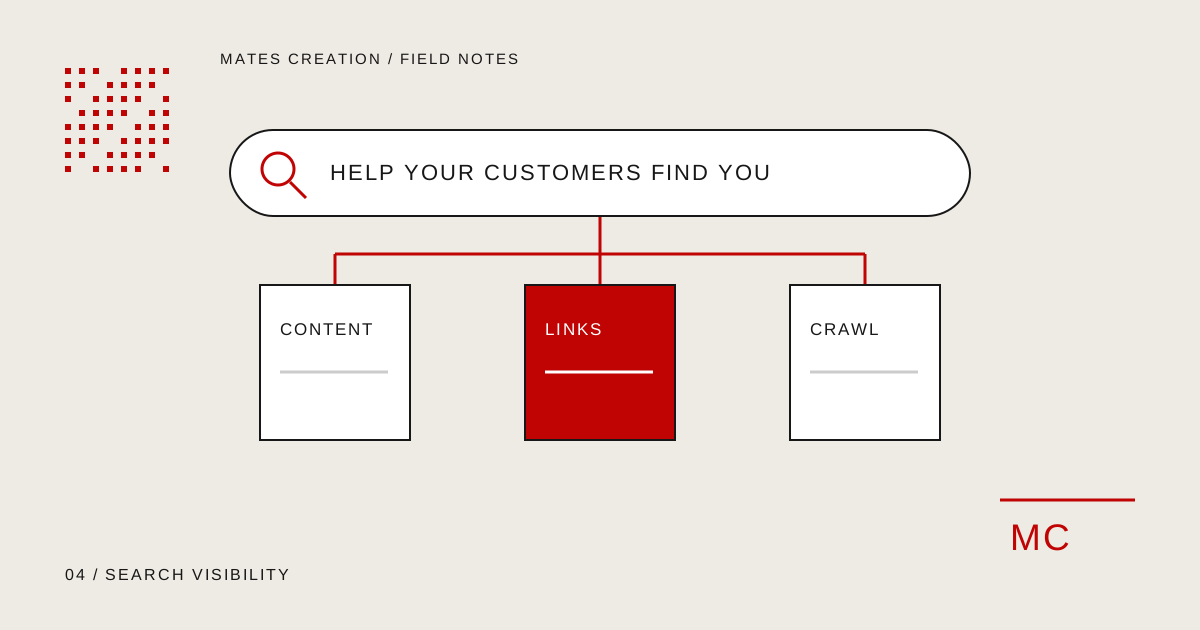
Important pages are hard to discover
Indexing problems, broken links and unclear site structure can keep relevant content out of the path of visitors and search engines.
Mates Creation reviews technical SEO, search intent and page content for new and established websites. We identify priorities, implement agreed changes and document the work. Based in Delhi, we accept projects across India and internationally. AI visibility reviews are optional and do not guarantee rankings or citations.
Discuss Your Project See what can be includedIndexing problems, broken links and unclear site structure can keep relevant content out of the path of visitors and search engines.
A page can describe a service broadly while missing the questions people ask about fit, process, cost and requirements.
Rankings, traffic and AI mentions are different signals. Without a baseline and a consistent method, it is hard to tell what changed.
We review your website and the search landscape before changing page titles or writing new content. Research identifies the questions and terms relevant to your actual services. The resulting plan separates technical fixes, page improvements and new content so the work has a clear order.
SEO concerns organic discovery. Google Ads involves paid campaigns and a separate media budget. Digital campaign planning and management are scoped on our Digital Marketing page.
Talk through your requirementsIdentify crawl, indexing, performance and page structure issues that may limit discovery.
Build useful content around what people want to understand, compare or buy.
Use available search data and repeatable checks to guide the next improvements.
These are the kinds of work we can include.
Your proposal defines the agreed deliverables.
Review crawl access, indexing signals, canonical links and sitemaps. A canonical identifies the preferred URL for a page.
Research what potential customers need to understand or compare, then identify the existing or new pages best suited to those needs.
Scope clearer titles, descriptions, headings and useful page copy grounded in verified business information.
Connect related services and important pages so users and crawlers can discover the relevant information.
Check machine-readable business or service information against visible content. Use existing SEO tools appropriately and avoid duplicate output.
Investigate agreed page performance issues and repeatable AI search questions. Report observed findings separately from implemented changes.
Check crawlability, metadata, internal links and the important pages from launch. Research can begin without months of historical Search Console data.
Use available search data and a technical review to identify weak pages, indexing issues and content gaps. Prioritise changes around your offer.
Check how selected AI tools describe your business on a repeatable set of relevant questions. Review accessible content and information that may support accurate answers.
Start with your business situation,
then agree the work it needs.
Useful when indexing settings and service pages need preparation, even without months of traffic history.
Useful when content does not clearly explain the offer or match what potential clients need to know.
Useful when available Search Console data and technical evidence can guide a prioritised plan.
These examples explain possible uses. They are not client projects or results.
A business could check page output, sitemap access and indexability, then organise clear service content and descriptive internal links before ongoing measurement.
A site could review duplicated metadata or conflicting canonical URLs, identify the source and test a scoped fix while preserving the existing SEO plugin.
We inspect existing plugins, analytics and Search Console access. Metadata and schema changes should complement the current architecture rather than duplicate it.
AI search checks use agreed questions and recorded observations. A readable content guide such as llms.txt can describe public pages, but does not promise a citation.
Where an improvement needs development, website development and technical changes can be included in a separately agreed implementation scope.
Each stage has a clear purpose. We agree the scope and feedback points before the project begins.
Plan your projectInspect page output and available search data, then review the intent behind relevant searches.
Agree technical fixes, content improvements and the information needed from your business.
Update approved copy, links or technical output through the existing site architecture.
Check metadata, canonicals, indexability and any structured data changed by the work.
Record findings, affected pages and completed actions so your team can understand the changes.
Monitor within the agreed period and compare observations over time. Results depend on how external systems process the site.
Each review can connect a finding to its source, affected page and recommended action. Search results and AI citations are controlled by external systems, so reporting should distinguish implemented work from observed outcomes. Your scope defines the monitoring period and review frequency.
Site size, technical complexity, research depth, content production and ongoing reviews affect the work. A focused audit and an ongoing content programme have different scopes.
Share your website, service priorities and access to available search tools. Confirm the products, locations and business facts the content should represent.
Tell us what you want to create or improve. We’ll review your brief and discuss a suitable scope.
Discuss Your ProjectUseful things to know before
scoping this service.
A new site can start with technical checks, service research and indexing preparation. Existing Search Console data helps prioritise improvements but is not a requirement for an initial review.
No. Search results and AI answers are controlled by external systems. The scope defines research, implementation and reporting rather than guaranteed positions.
The agreed review can cover crawl access, indexing, canonicals, metadata, sitemaps, page structure and performance issues. Site size and the systems involved determine its depth.
Yes. We inspect current configuration and page output, then use the existing tooling where appropriate. Duplicate metadata, sitemaps and schema should be avoided.
No. It is a readable guide to public content. Clear pages and accurate business facts remain essential, and a guide cannot guarantee how an AI tool will answer.
The monitoring period and review points are agreed in the proposal. Search engines need time to process changes, and new sites may initially have limited data.
Start a new website’s SEO with customer questions, clear service pages, crawl checks, accurate metadata and Search Console measurement.
Read the guideShare your website and the services or products you want to prioritise. We will discuss an evidence-led audit and improvement scope.
Discuss Your Project